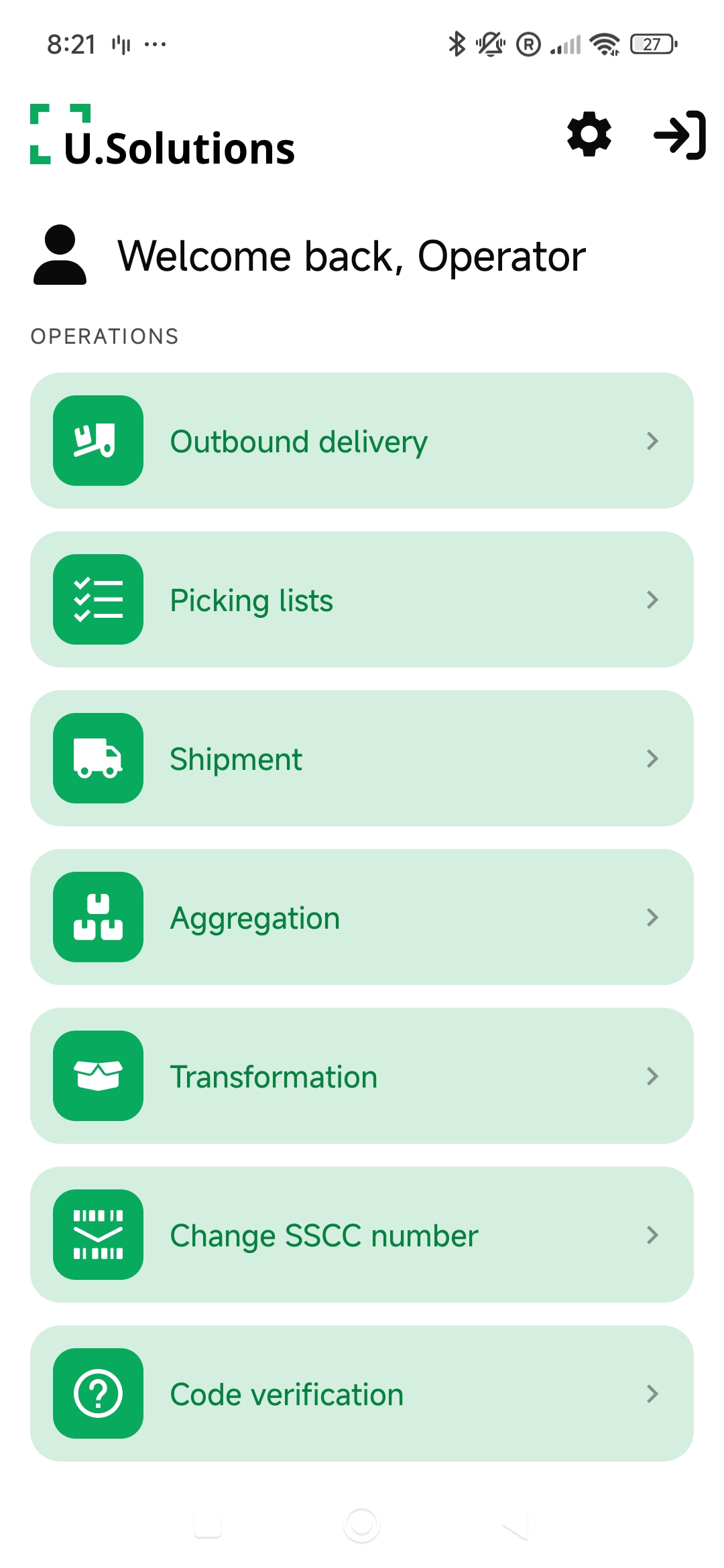
Start from the warehouse operations home
Operators begin from a clear set of outbound, picking, shipment and aggregation operations, giving the copilot immediate context before execution starts.
Give warehouse and outbound teams an AI teammate that helps them scan, aggregate, verify and complete shipment workflows on standard iOS and Android devices. Grounded in real execution context across ERP, WMS, MES and partner systems.
The ERP may define the shipment, but the actual decision still happens in a warehouse aisle, at a packing station, on a loading dock or during aggregation. U.Solutions Operator Copilot closes that last gap with scan, verify, pallet and sync workflows running on standard phones instead of dedicated scanner fleets.
Built around real warehouse, aggregation and shipment tasks, not a generic scanner shell or a disconnected chat overlay.
Start from the right outbound delivery, picking list or aggregation task so the agent can guide execution from the first warehouse step.
Capture GS1 and serialized labels, verify expected units and keep manual fallback when codes are damaged, duplicated or unreadable.
Record pack, pallet and SSCC changes in real time and create the outbound events an agent can validate, reconcile and explain.
Review what is packed, what is still open and where exceptions or missing confirmations need human attention before dispatch.
Browse SKU, GTIN, batch and packaging context with mobile access to the reference data an operator copilot can act on.
Support frontline execution and warehouse supervision in one app, keeping the agent grounded in both action-level events and shipment review.
Works on standard iOS / Android devices.
No €1000+ scanners required for rollout.
Integrate scanning into existing partner apps.
Examples shown below come from an FMCG outbound and aggregation workflow, while the interaction model itself is reusable across regulated traceability environments where operators still need guided execution.
Operators begin from a clear set of outbound, picking, shipment and aggregation operations, giving the copilot immediate context before execution starts.
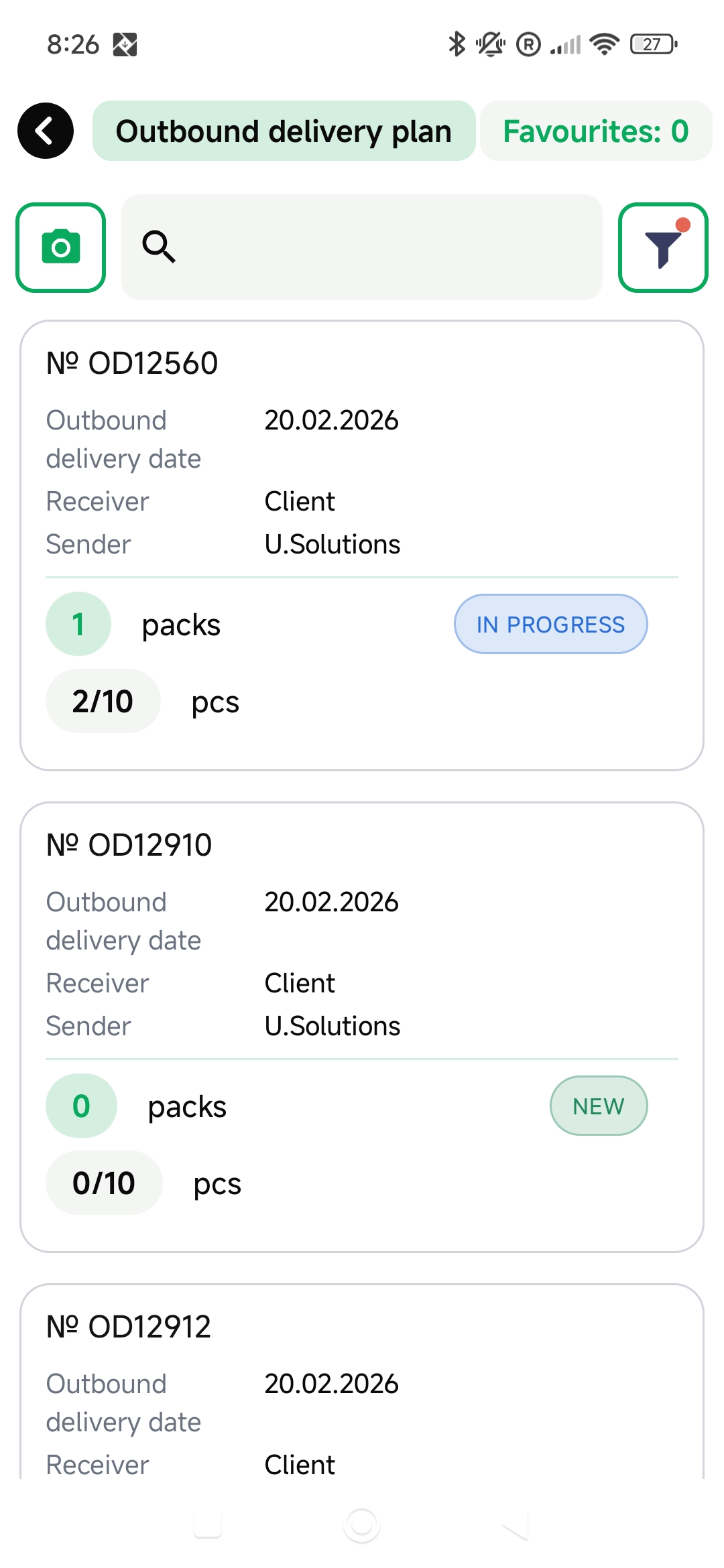
Delivery lines, pack counts and execution status stay visible in one place so operators and supervisors can work from the same outbound context.
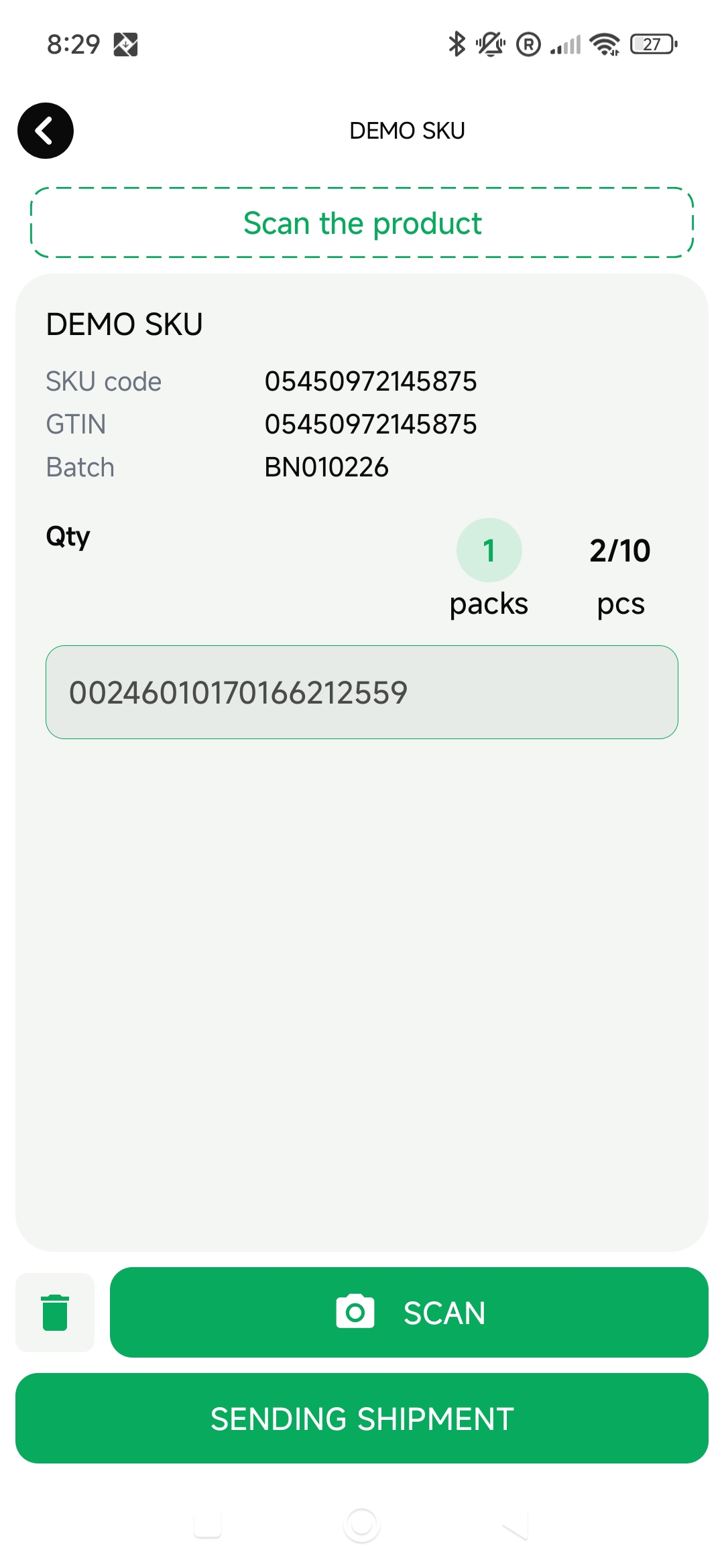
Barcode capture drives the core outbound flow, while visible SKU, GTIN, batch and quantity context help the copilot guide operators through each packing and aggregation step.
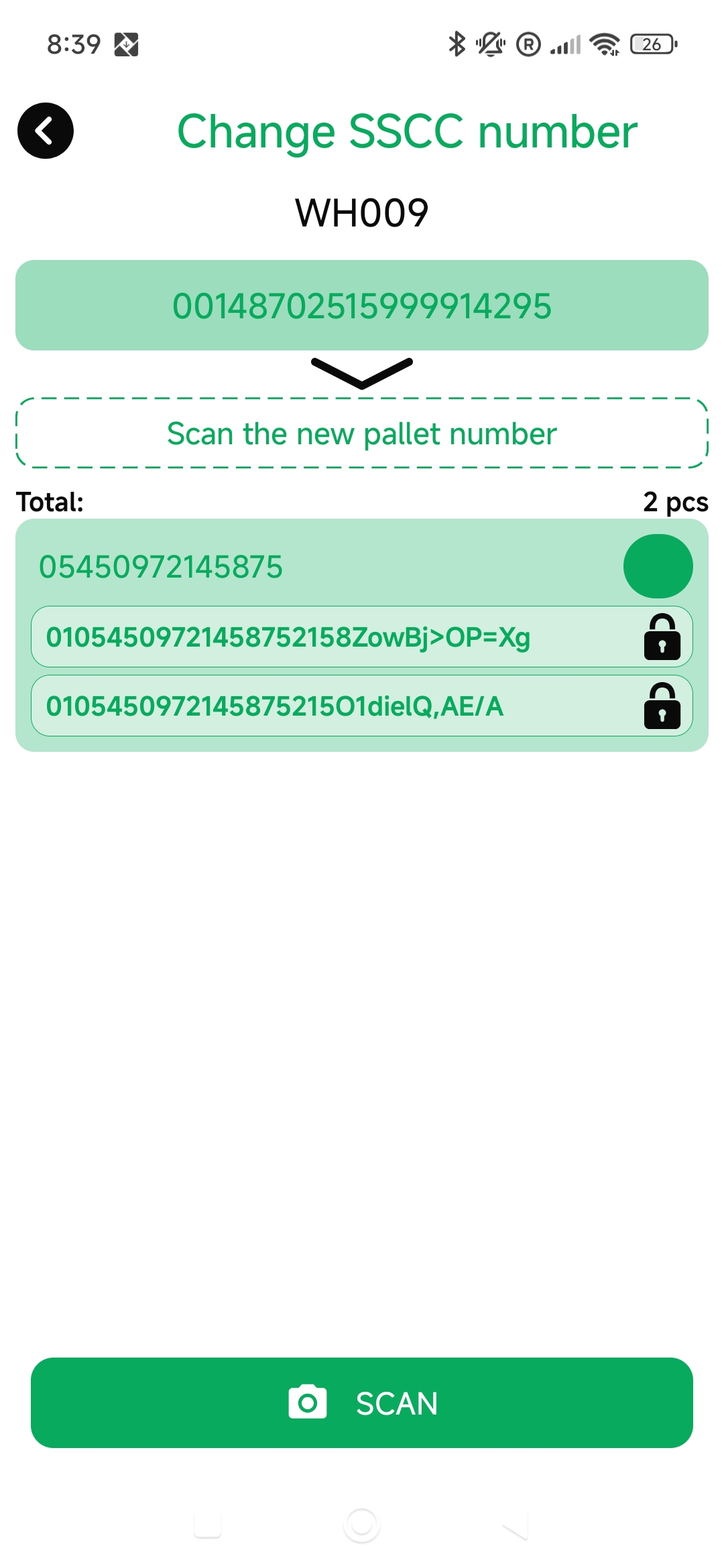
When a code has already been used, the app blocks the step immediately and surfaces the exception before the wrong outbound event is finalized.
Operators can keep packing and shipping while the app handles background sync and keeps execution status explicit when connectivity returns.
Core outbound execution can continue in weak-signal environments, with local completion and deferred cloud confirmation instead of blocking the operator.
When barcodes cannot be scanned, the operator can still continue through typed identifiers instead of stopping the shipment flow.
Wrong codes, missing stock, invalid aggregation steps and duplicate scans can be blocked before the shipment event is finalized or escalated.
Operator completion is explicit, signed and reviewable, creating the durable record that keeps the agent accountable to regulated outbound operations.
The same operating model supports different industries even when the actual data objects, labels and workflows vary by domain.